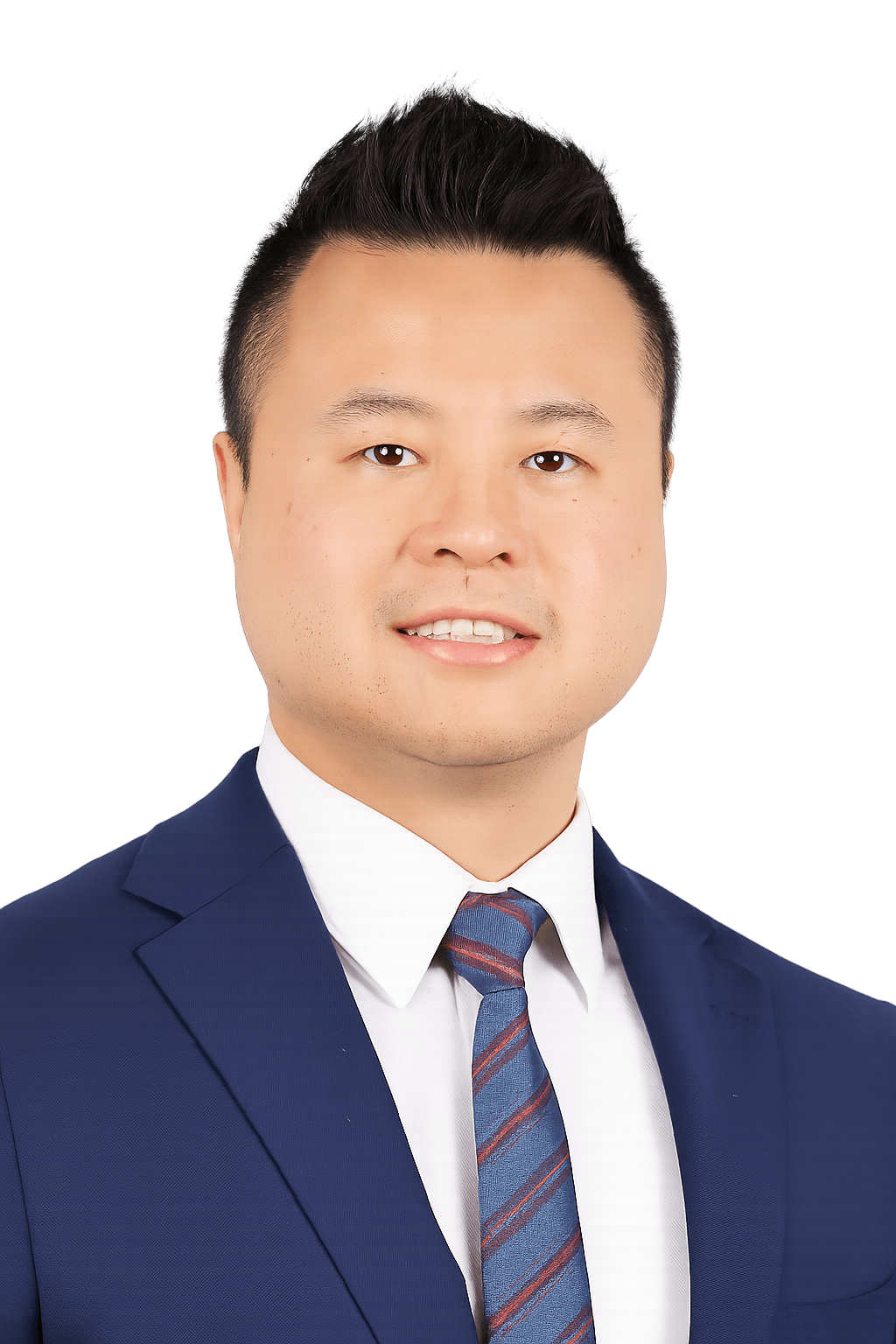
Dr Keegan Lee
Orthopaedic Surgeon
BMed, MTraum (Distinction), FRACS (Orth), FAOrthA
Dr Keegan Lee is an orthopaedic surgeon with a focused practice in hip and knee replacement and spinal surgery, treating a spectrum of conditions ranging from degenerative and deformity-related pathology to acute traumatic spinal injuries.
His mission is to alleviate pain, restore movement and function through a structured, evidence-based approach.
Background
Dr Lee is a Fellow of the Royal Australasian College of Surgeons and the Australian Orthopaedic Association, having completed orthopaedic training across multiple Level 1 trauma centres and major joint replacement units in NSW and the ACT. This training provided broad exposure to both acute and elective orthopaedic care, managing conditions ranging from high-energy trauma through to advanced joint degeneration across metropolitan and regional health services.
Following this he pursued subspecialty fellowships in advanced spinal surgery at the Princess Alexandra Hospital, Brisbane and the Royal National Orthopaedic Hospital, Stanmore, London. This has equipped him with the clinical judgement and technical expertise to manage spinal trauma and spinal cord injuries, as well as apply minimally invasive techniques through anterior, lateral and posterior approaches.
Approach
My philosophy has been shaped not just by training, but by exposure to different surgeons, systems, and ways of thinking. Working across different healthcare environments reinforced early on that there is rarely a single “right” way to approach a problem. Instead, good decision-making comes from understanding the full range of options, knowing when each is appropriate, and being willing to adapt.
Outside of medicine, travel abroad and time spent immersed in different cultures has influenced this further. It has developed a natural tendency to observe, question, and learn — particularly in unfamiliar or complex situations — and to integrate those insights into how I practise.
This carries through into both joint replacement and spine surgery. I utilise established principles where they are proven and reliable, while remaining open to evolving techniques where they offer a meaningful advantage. In hip and knee arthroplasty, this includes both traditional instrumentation and robotic-assisted approaches. In spine surgery, it includes the continued development of minimally invasive and endoscopic techniques.
Most patients I see are not just dealing with pain or physical limitations — they are trying to understand what is happening, what their options are, and whether surgery is necessary. I see it as my role to reduce that uncertainty. That means taking the time to explain the problem clearly, outline the options, and ensure the reasoning behind each recommendation is understood.
Surgery is never treated as the default solution. When it is appropriate, it is approached with detailed planning, precision, and a clear objective — to improve pain, restore function, and achieve a durable result. When it is not, equal importance is placed on non-operative pathways, with a focus on helping patients understand their condition and what they can realistically expect moving forward.
The aim is for patients to feel informed, supported, and confident in the decisions they are making — not rushed or uncertain.